
From a dentist’s request to a finished case
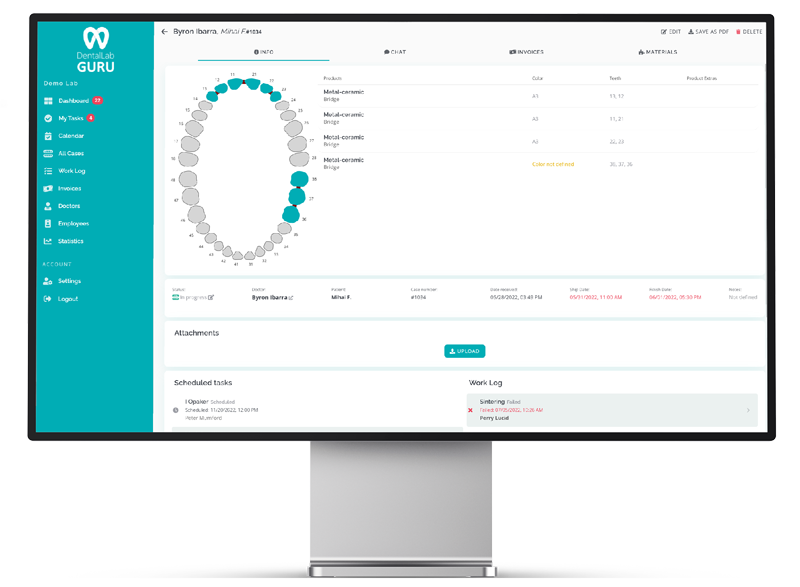
A lab records the dentist’s request, due date, materials, files and notes against a case. As the work moves through production, staff can see its current stage and who is responsible. Delivery, invoices and payment status stay attached to that same case.
That lets a lab answer everyday questions: what is due, what is late, what each technician is working on and which completed cases still need payment.
A customer who used every feature
One customer used every feature in the app. That depth of use surfaced bugs, inconsistencies and feature requests across the product, giving us a much clearer picture of where daily work was awkward.
I used that feedback to fix bugs, resolve inconsistencies and shape further development. The result was a tighter, more consistent application across the workflows that customer relied on.
Evolving the backend
As Dental Lab Guru grew, I moved parts of it towards Node.js, EventBridge and event-driven workflows. My work spans backend development, cloud infrastructure and frontend implementation, alongside releases and direct conversations with customers.